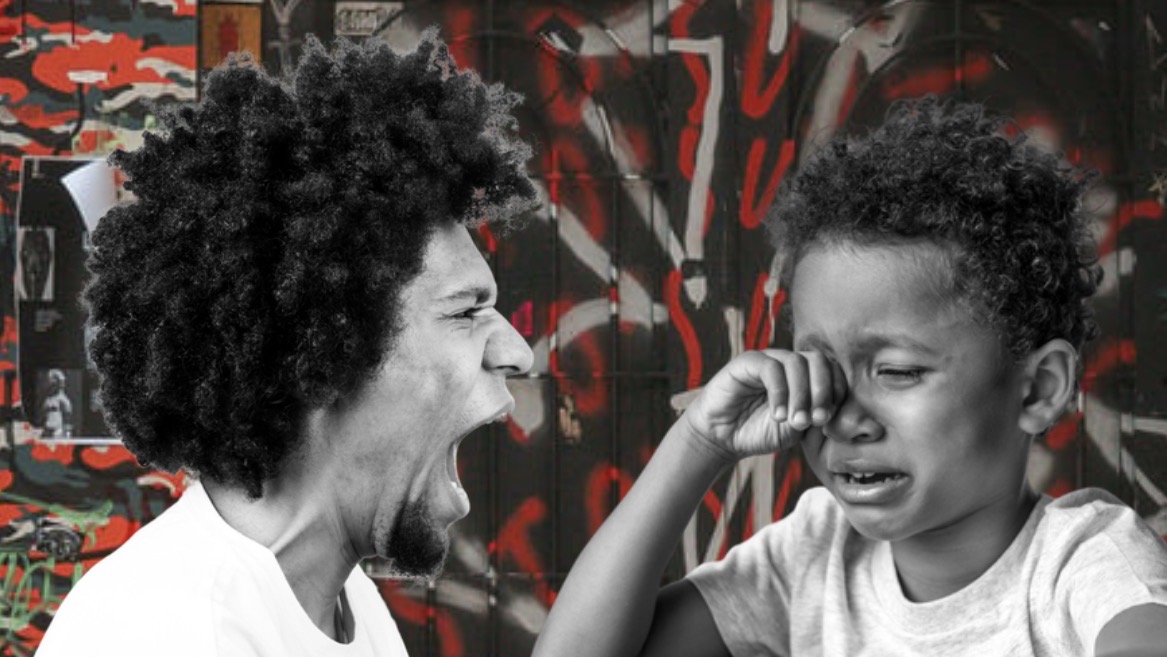

The Template of a Man
Hello readers, Jaime here. Today I’ll be asking the question: Why is emotional vulnerability so difficult for our Black boys?
Let’s face it, most of us were told to “man up” at some point in our lives. At that moment, some questioned what it meant to be a man. Maybe they even feared the person who said it. Others questioned whether it meant they weren’t enough. As boys, we had to look to the “ideal man” for answers. This person would become the first male figure a boy bases his identity on.
He focuses on how this man talks, walks, and speaks. Little boys learn through experience and example. For some boys, this becomes the first piece of their foundation. It helps shape how they will operate in adulthood. As he grows, he carries pieces of that first man wherever he goes. This man serves as a chameleon—a plethora of possibilities. A false identity, a role model, whether good or bad. Sometimes, he can even set the framework for what a young man is sexually attracted to.
The Gay Rock Cycle
Boys learn what they can from their fathers, brothers, relatives, and peers. However, gay boys aren’t like every other child. Something feels different. It may be a feeling or an inclination. Whatever it is, it isn’t what most boys feel. Without proper nurturing, some boys begin to resent that feeling. They begin to internalize it. Anyone who has been a little gay boy can relate to questioning the normality of who they are on the inside.
Black fathers often want sons who are strong-willed, not sensitive or “soft.” Black boys can talk to their fathers, but not about anything too emotional. Otherwise, it is seen as stepping into “gay territory.” This gray area becomes something they cannot navigate and is automatically off-limits. Growing up in the early 2000s, feelings meant gay, and gay equaled bad. No child wants to be seen as bad. Thus, most hid the fact that they were gay. It is a very simple and common cycle.
The Natural Order of Things
The Black community can be quite conservative. Conservatism is rooted in the preservation of established social order and often expresses skepticism toward unfamiliar or rapid societal change. A lot of Black parents were taught that being gay is a sin. That ingrained lesson is written into their minds in permanent ink. Some may call homosexuality “the devil at work” and believe that being gay is not the natural order of things. Yet they rarely speak about how pedophilia is sometimes less condemned than homosexuality. It is not often discussed how Black boys are left emotionally unprotected, leaving many emotionally immature and easily manipulated. I suppose the “natural order of things” is not such an immovable line after all. Desire is a part of the natural order, but that is no excuse to be evil.
Some religions say that “all sins are equal.” Essentially, all sins can be forgiven. I believe most ideas regarding religion stem from fear, whether it be fear of the unknown or fear of punishment. Black men often fear that their sons won’t fit the silhouette they imagined in their heads. In the same breath, Black men are not allowed to express fear openly, at least not publicly.
As stated earlier, they are conditioned to be seen as strong, so any deviation from that image is automatically viewed as weakness. Having feelings in general is seen as soft, so imagine how a gay boy could feel. Imagine how vulnerable he could become without proper emotional guidance. Most of these boys turn to their mothers because their fathers don’t want to hear it, yet some fathers wonder why they don’t share the same bond with their children as their wives do. Those children are considered lucky.
What Do Little Boys Fear?
Gay Black boys withhold their feelings out of fear. They are pressured to become the ideal man: a protector, a provider, a warrior, and a king. However, they also need encouragement to be creative, emotionally available, and gentle when necessary. Let’s not pretend that most Black boys weren’t taught to fight when necessary. This lesson can contribute to behavioral issues and a lack of emotional intelligence in adulthood. Even when the facade of strength is broken by stress or vulnerability, it is quickly dismissed by men who experienced the same thing themselves. Around and around it goes—an endless cycle of men who teach and children who follow suit, for better or worse. In the eyes of much of the Black community, the weakest version of a Black man is a gay one.